When the lakes run low : transboundary water governance and drought
Switzerland is often described as Europe's "water tower". But summer 2026 offered a sobering reminder that being upstream does not always mean having water to spare – and that this can have consequences for transboundary relations.
The Swiss Federal Office for the Environment described summer 2026 as an exceptionally dry period, with very low flows and unusually low water levels in numerous Swiss lakes and reservoirs. The effects were particularly visible in the transboundary water systems of the Alps, where decisions about water levels and releases can have consequences on both sides of a national border.
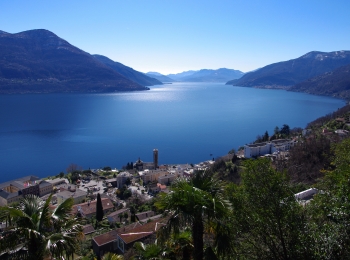
Lake Maggiore provides a striking example.
By early August, the lake was experiencing critically low water levels, with consequences for agriculture downstream in northern Italy. The Italian authorities requested additional water, but it was not a simple case of Switzerland having water to transfer. The Canton of Ticino was itself experiencing drought, while water reserves supplying its hydropower plants were already low. Additional releases were therefore not considered possible without consequences for energy production and existing concessions.
The competing needs were clear : downstream, northern Italian agriculture needed water ; upstream, Ticino needed to retain water for hydropower. Drought made visible a set of trade-offs that, under normal conditions, can remain largely invisible.
On 10 August, an emergency meeting of the Italian-Swiss bilateral consultation body responsible for Lake Maggiore considered how to respond. A temporary solution was found ; the discharge from Lake Lugano at Ponte Tresa was increased from 3 to 8 cubic metres per second, allowing additional water to flow through the Tresa River into Lake Maggiore. Around six million cubic metres of water were thus transferred over ten days. Water levels in Lake Lugano fell by around 8 cm, before the rains returned.
Productive tension ?
The episode is interesting precisely because it was neither a simple case of cooperation nor a straightforward conflict.
Drought creates competing needs. It exposes different understandings of risk and different territorial responsibilities. And it requires countries – and different levels of government within countries – to work through institutional mechanisms to find solutions that are considered acceptable under rapidly changing conditions.
Tension or conflict, in this sense, is not necessarily a sign that transboundary water governance is failing. Some degree of conflict is almost inevitable when countries, regions and water users depend on the same resource but face different priorities and risks.
What matters is whether there are mechanisms for working through those tensions, and the willingness to do so. With these conditions in place, tension can even be productive.
The Lake Maggiore case shows how existing institutional relationships provided a space for negotiation and allowed authorities to find temporary solutions when existing arrangements did not provide an obvious answer. It also illustrated how governance systems often work – in practice – in a sort of "institutional bricolage" : actors work with the rules, relationships and infrastructure available to them to respond to an emerging problem.
But improvisation also has its limits. There is also value in establishing transboundary water agreements that, on the one hand establish rules for regulating water levels, managing flows and coordinating different uses of shared water resources under "normal" conditions, but that can also have provisions for extreme conditions.
Lake Geneva offers an interesting and recent example. In September 2025, Switzerland and France signed two new agreements on the management of the waters of Lake Geneva and the Rhône. The agreements explicitly provide for greater cooperation in exceptional situations and strengthen mechanisms for coordination and information sharing in these contexts.
Indeed at the global level more and more countries are ratifying the Convention on the Protection and Use of Transboundary Watercourses and International Lakes (Water Convention), which requires Parties to prevent, control and reduce transboundary impact, and to use transboundary waters in a reasonable and equitable way and ensure their sustainable management.
Looking forward, drought in European basins will require not only deep understanding of the hydrological, social, economic systems that shape water use and availability, but also goodwill between states, a desire to build shared institutions that are flexible and adaptable to changing conditions. These agreements can derive from global frameworks or be bespoke to the particular context – the important thing is communication, and striking a balance between structure and flexibility.
Infrastructure needs to be in place
Infrastructure is another part of long-term drought response planning. Having the goodwill and institutional arrangements to share water is important – but it is not sufficient. Water still has to be physically moved.
The Lake Maggiore–Lake Lugano episode demonstrates this : the two lakes are connected through the Tresa River, creating a physical pathway through which additional water could be transferred. The negotiated response was therefore possible not only because authorities could agree to it, but because the physical infrastructure and hydrological connections made it possible.
It may seem obvious, but it is not always physically possible to get water to "priority uses" when drought strikes. So as droughts become more frequent or severe, countries and sectors will need to consider not only what their governance arrangements allow them to do, but what their infrastructure systems enable them to do and invest accordingly.
SNSF Project on transboundary water governance in Europe
These questions are at the heart of an ongoing SNSF-funded project at the University of Geneva, Transboundary water cooperation between EU member States and third countries : governance resilience analysis and hydropolitical model-building.
The project examines how legal and institutional arrangements for transboundary water cooperation respond to changing environmental and political conditions, with research spanning several European transboundary basins, including the Po, Rhine, Rhône and Danube. A particular focus is the relationship between EU Member States and third countries, making Switzerland's international water relations an important part of the research.

Laura Turley
Dr. Laura Turley is the Senior Science-Policy Manager at the Geneva Water Hub – a Centre of Competence on Water for Peace. Laura holds a PhD in Environmental Governance from the University of Geneva.